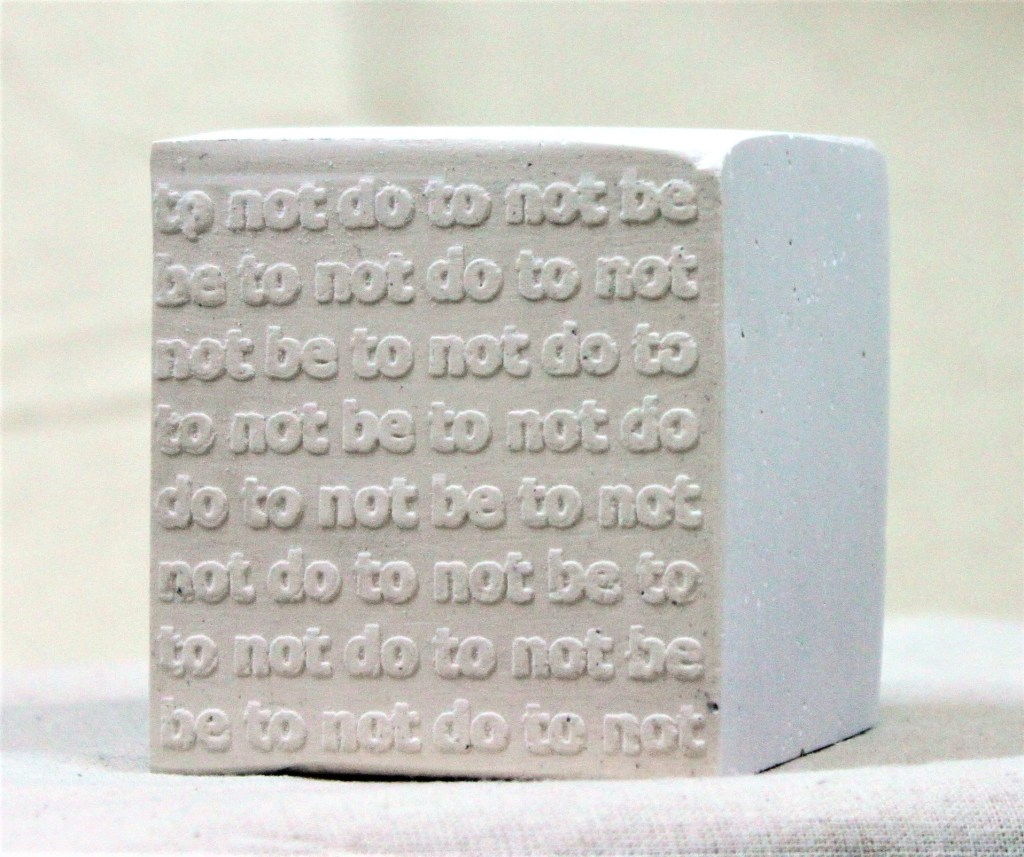
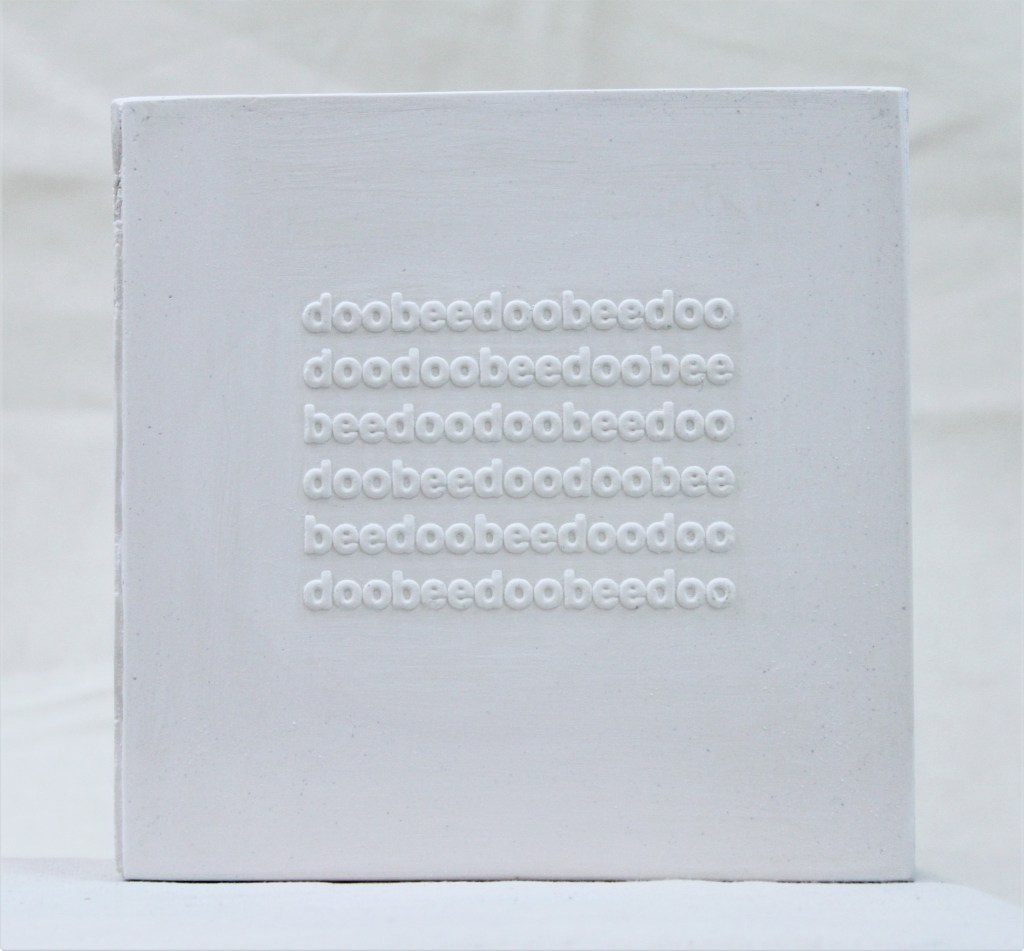
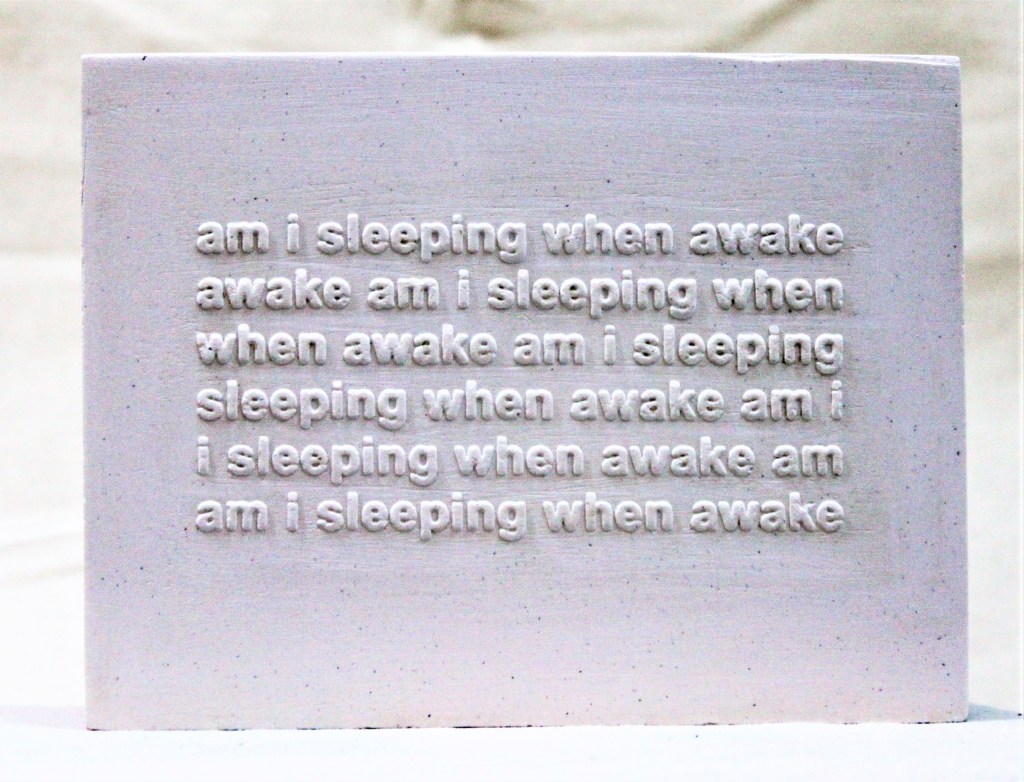
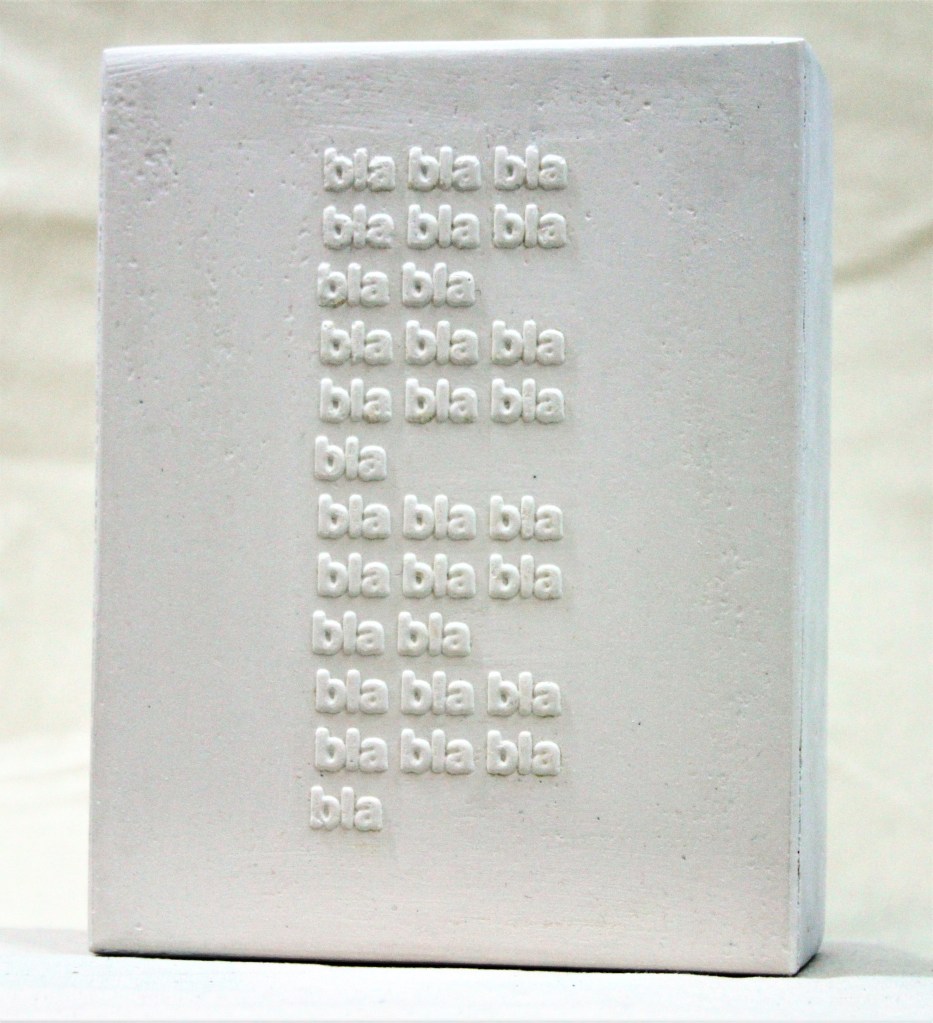
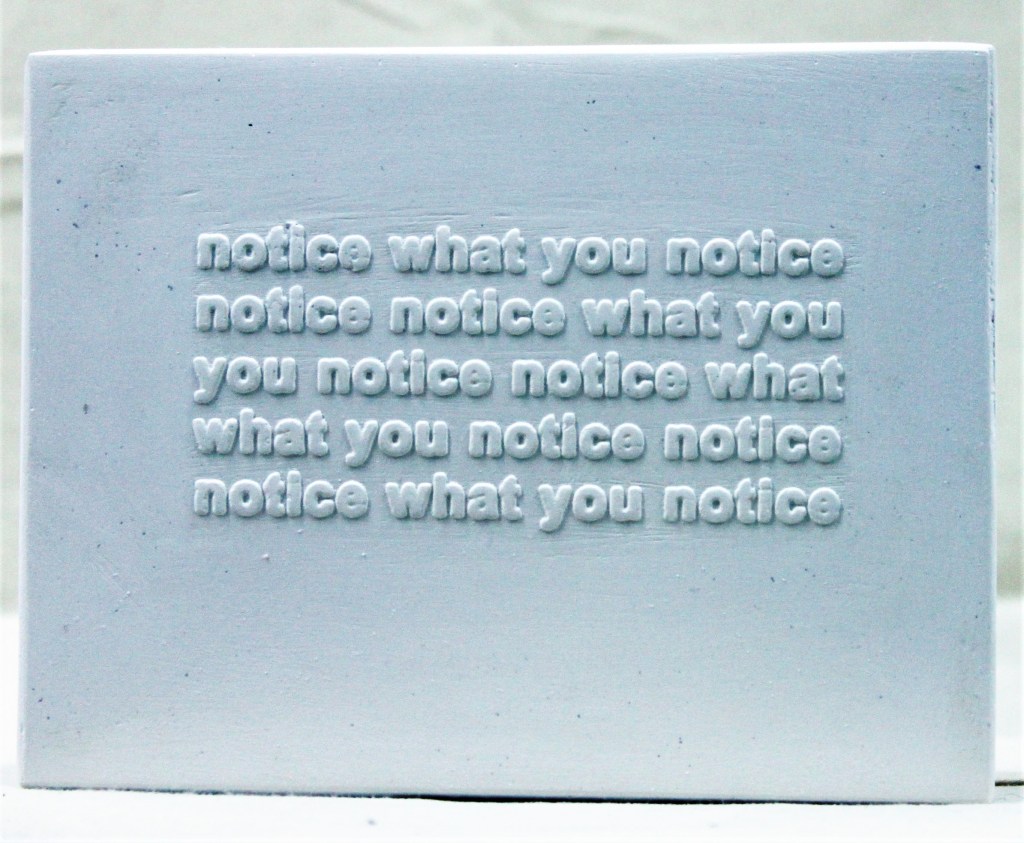
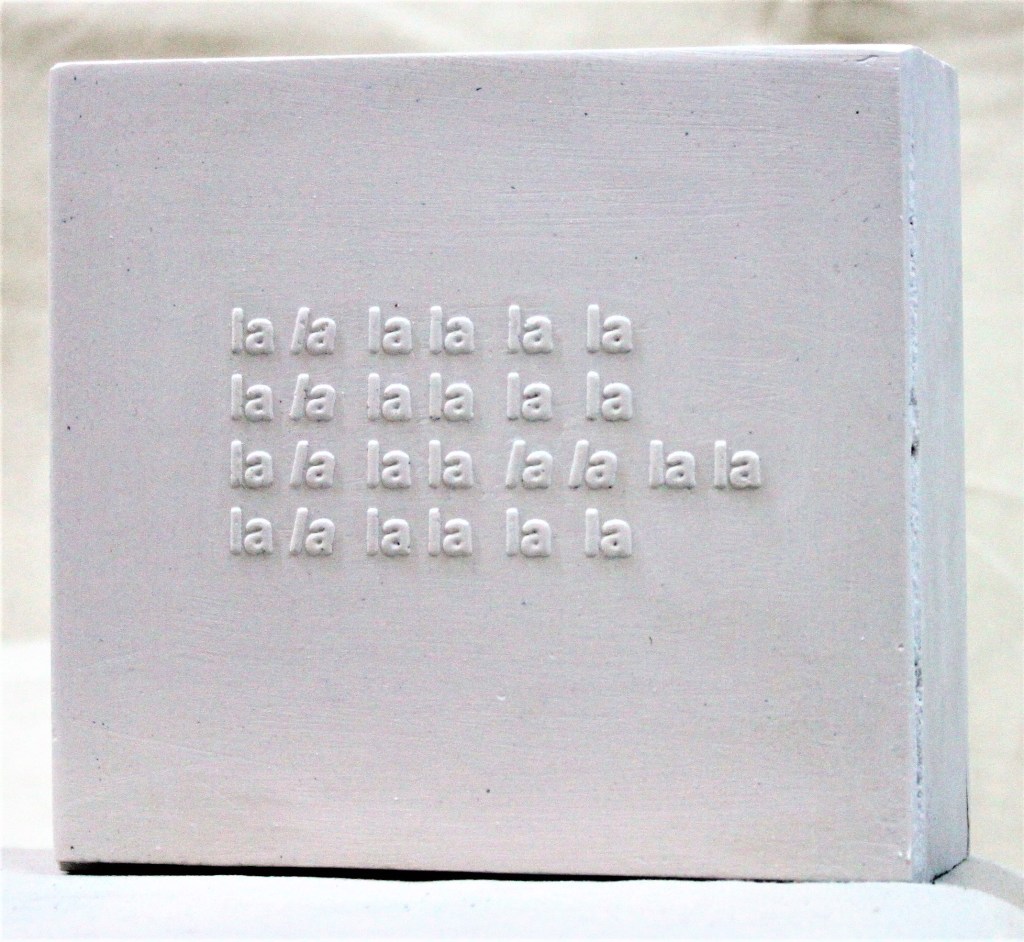
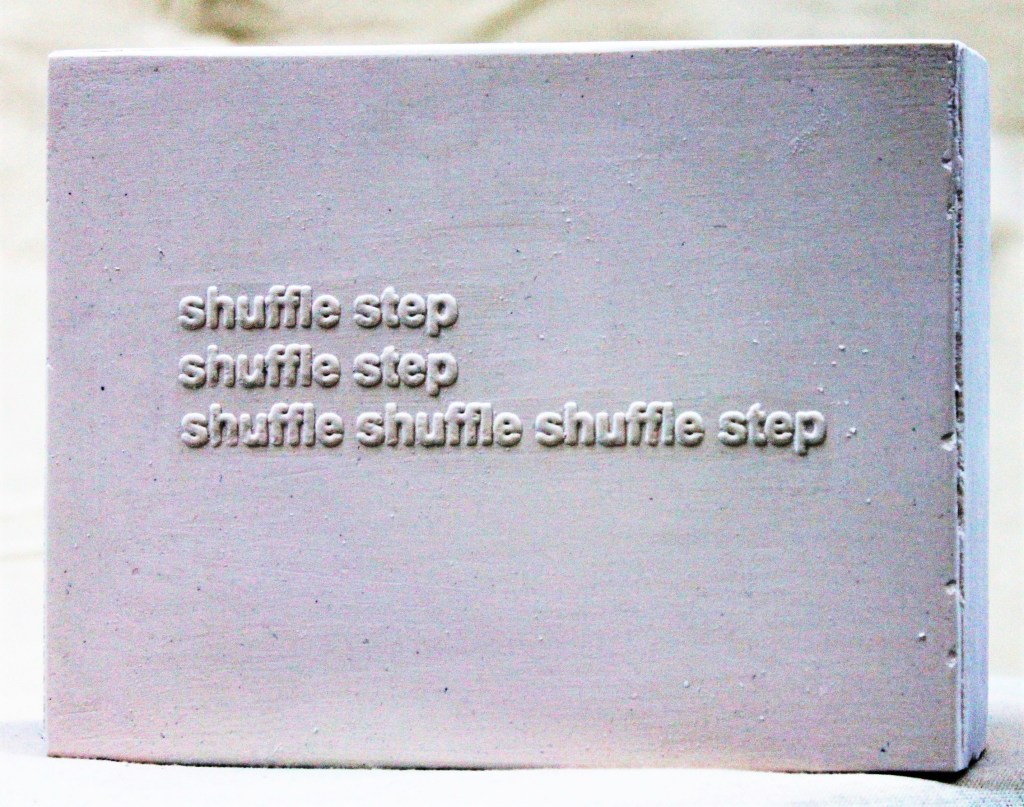
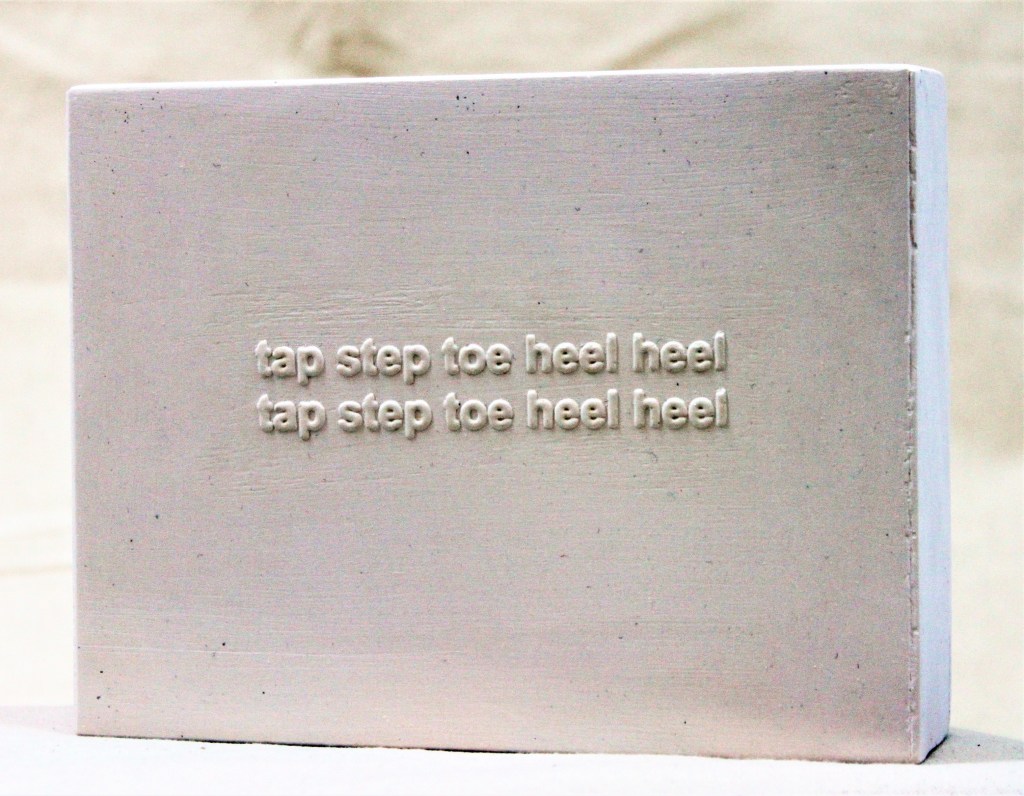
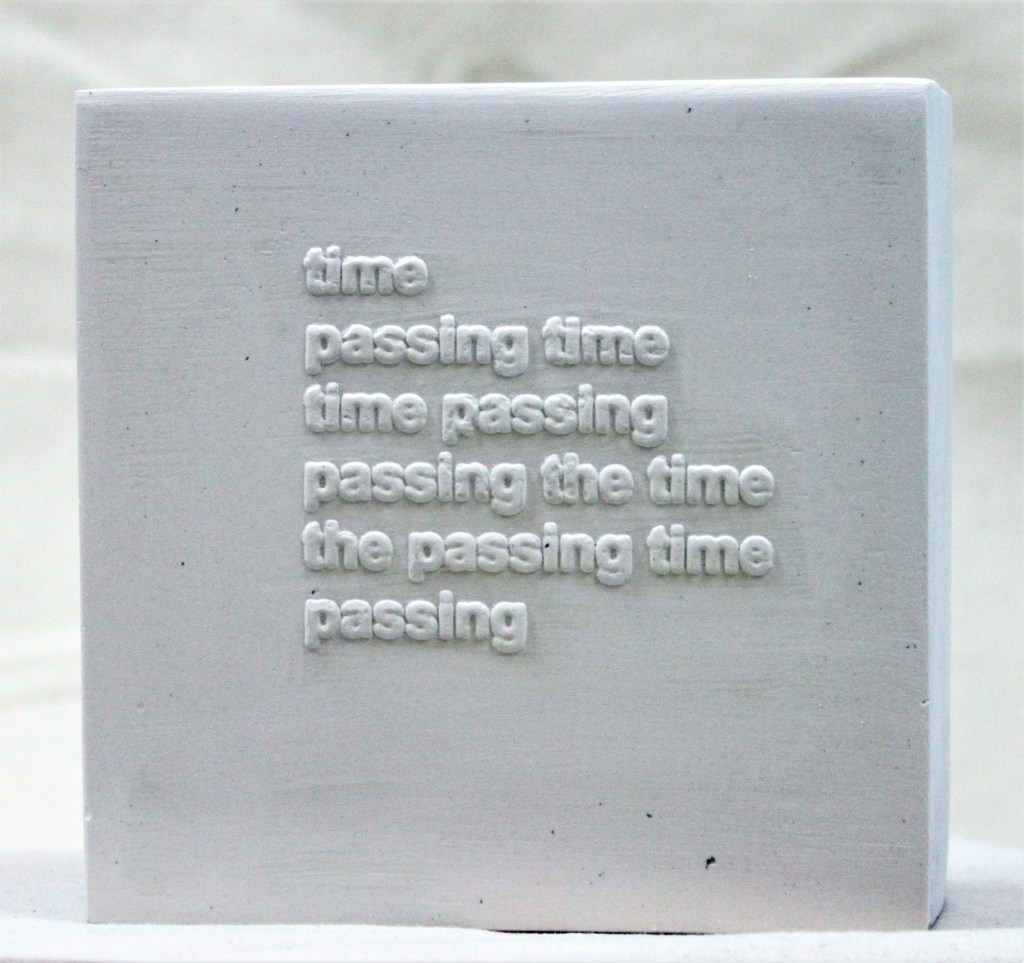
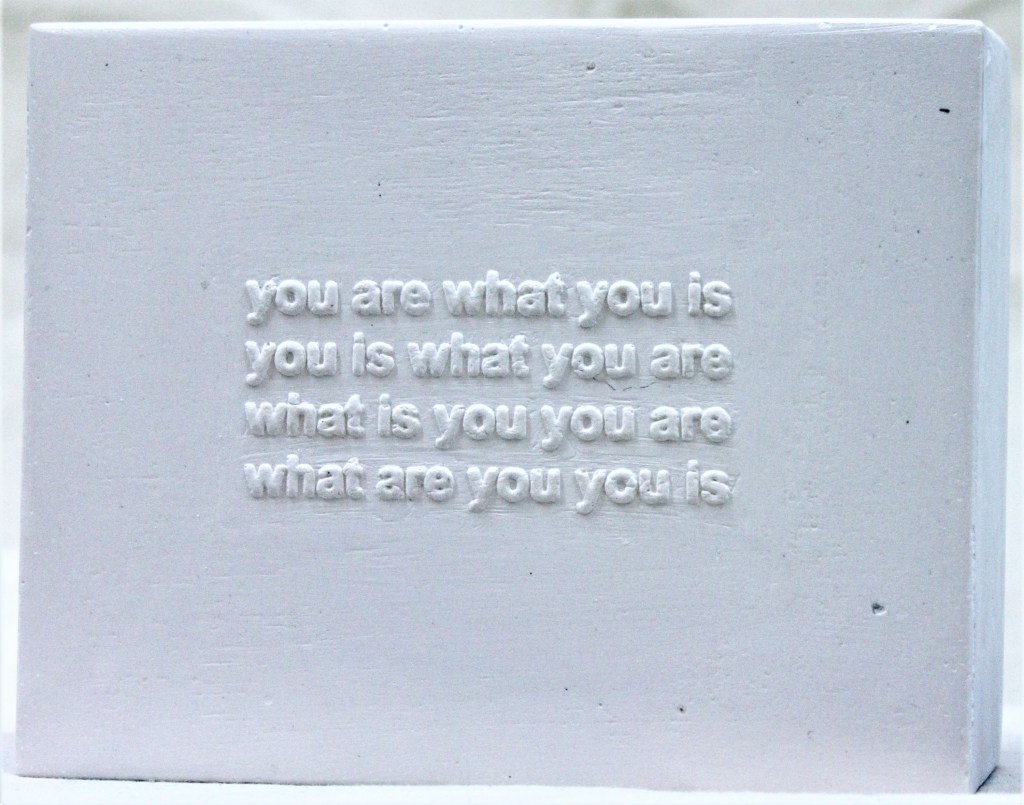
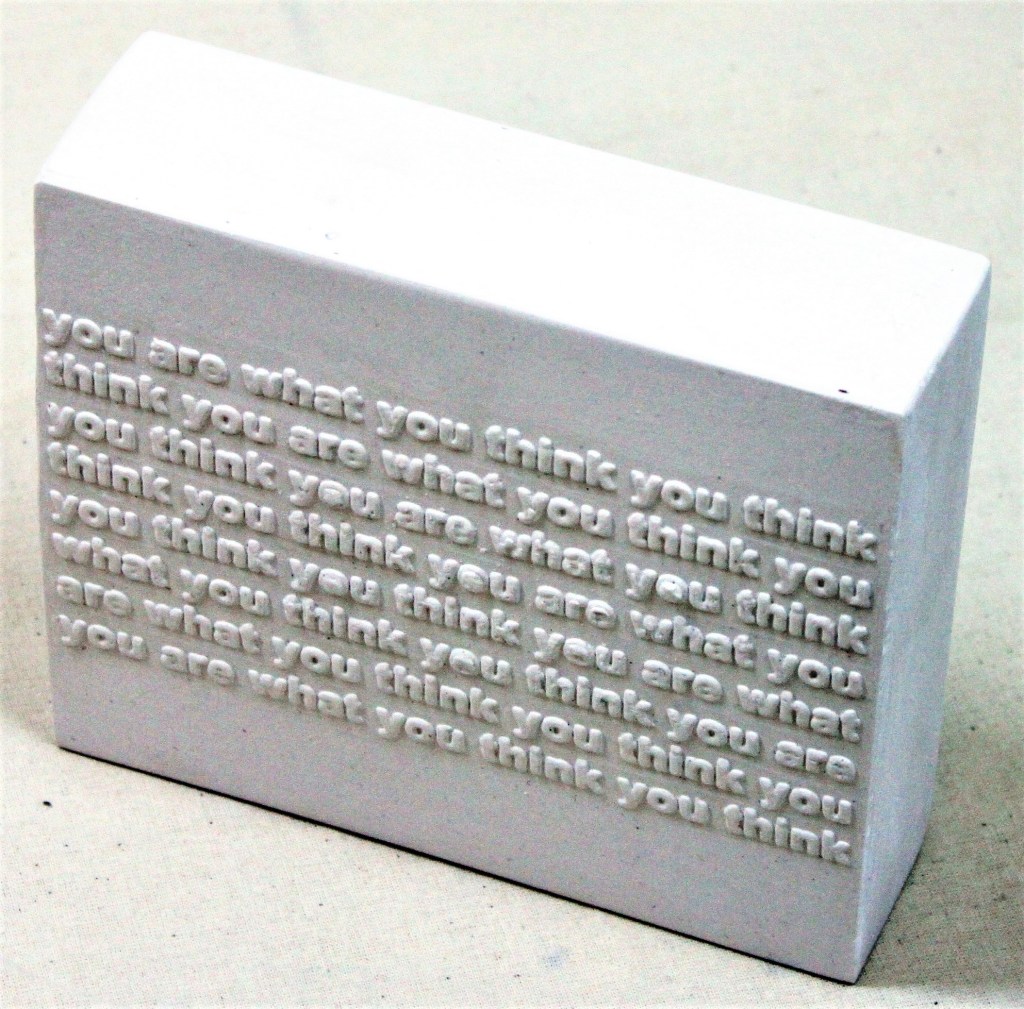
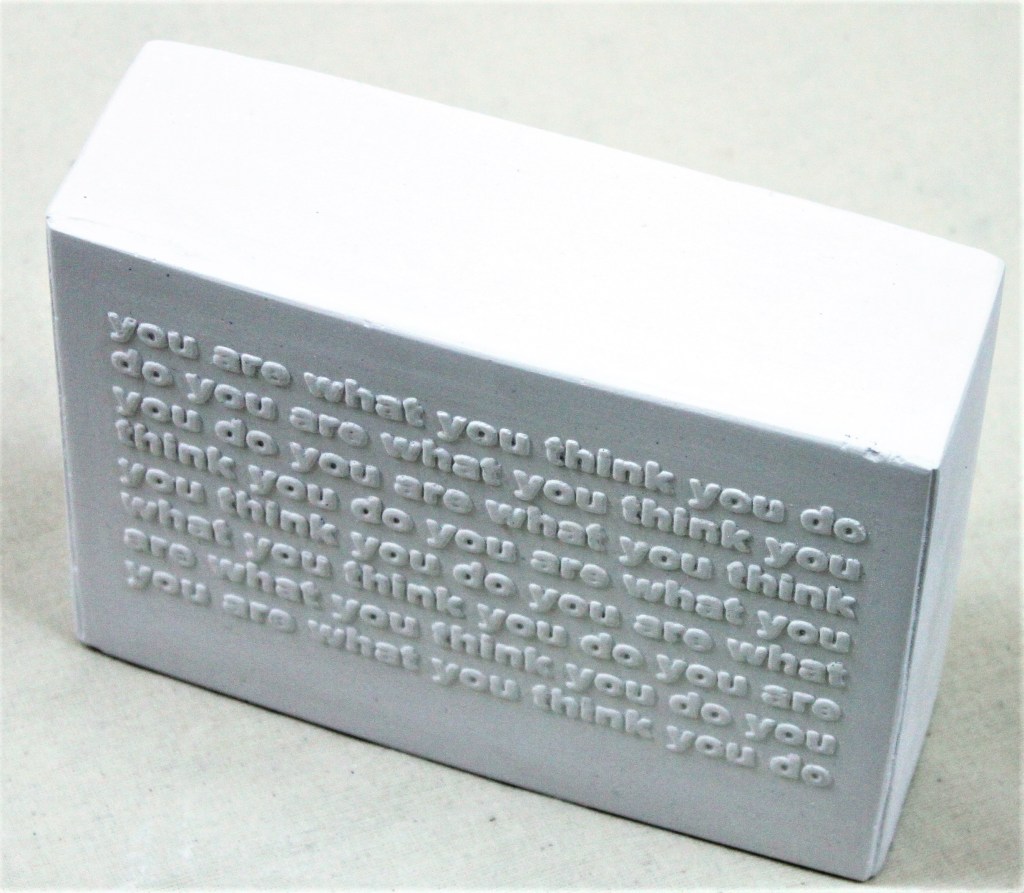
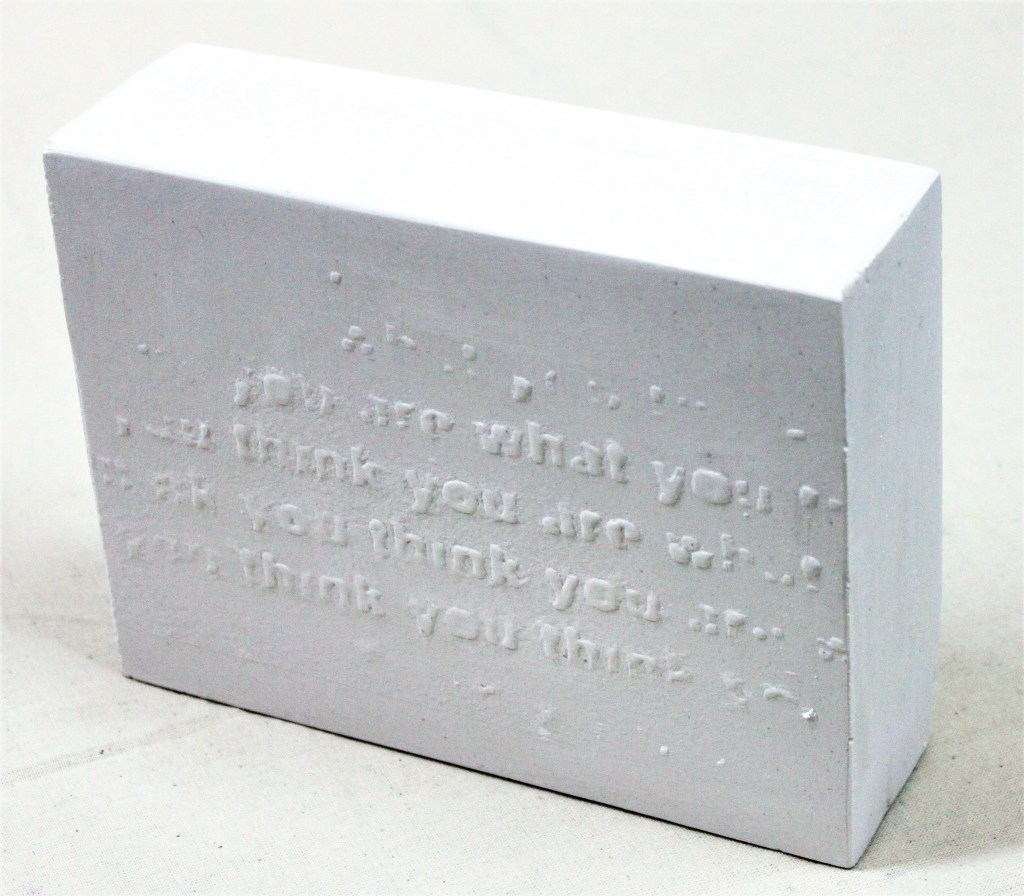
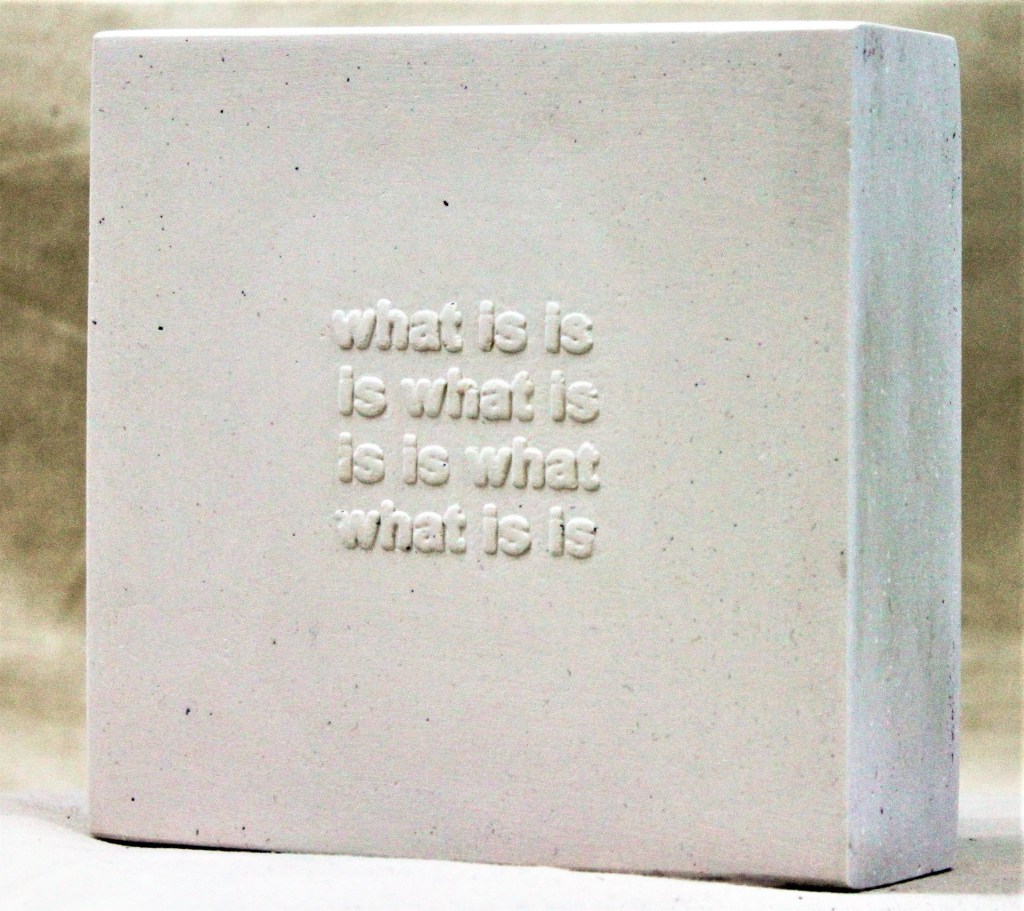
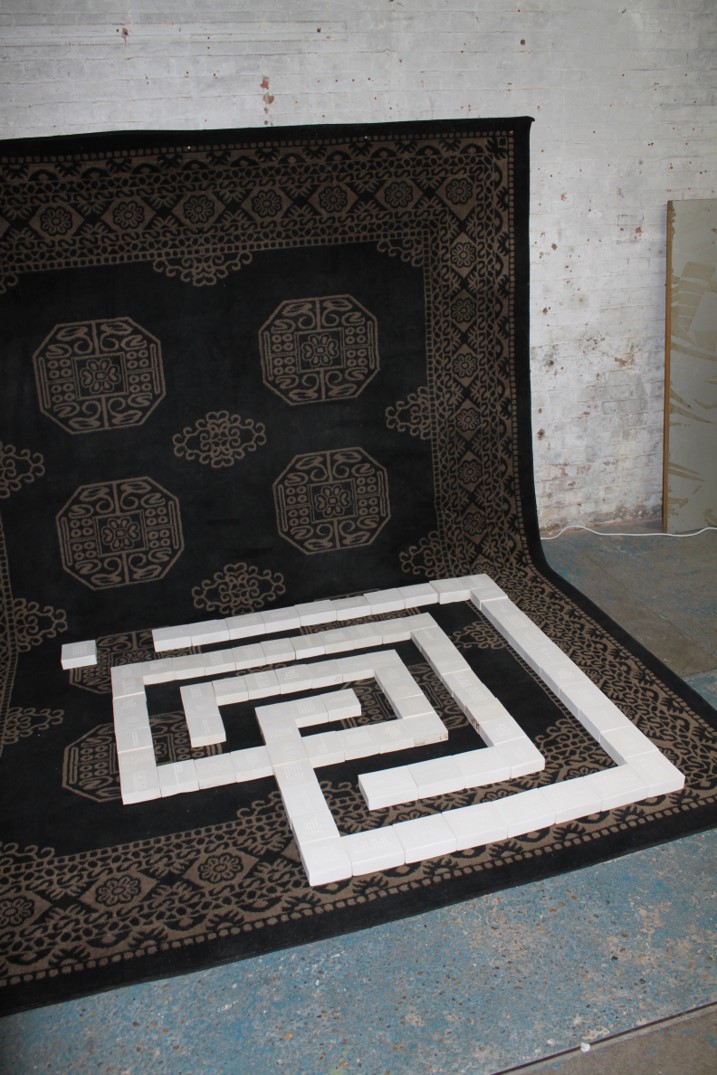
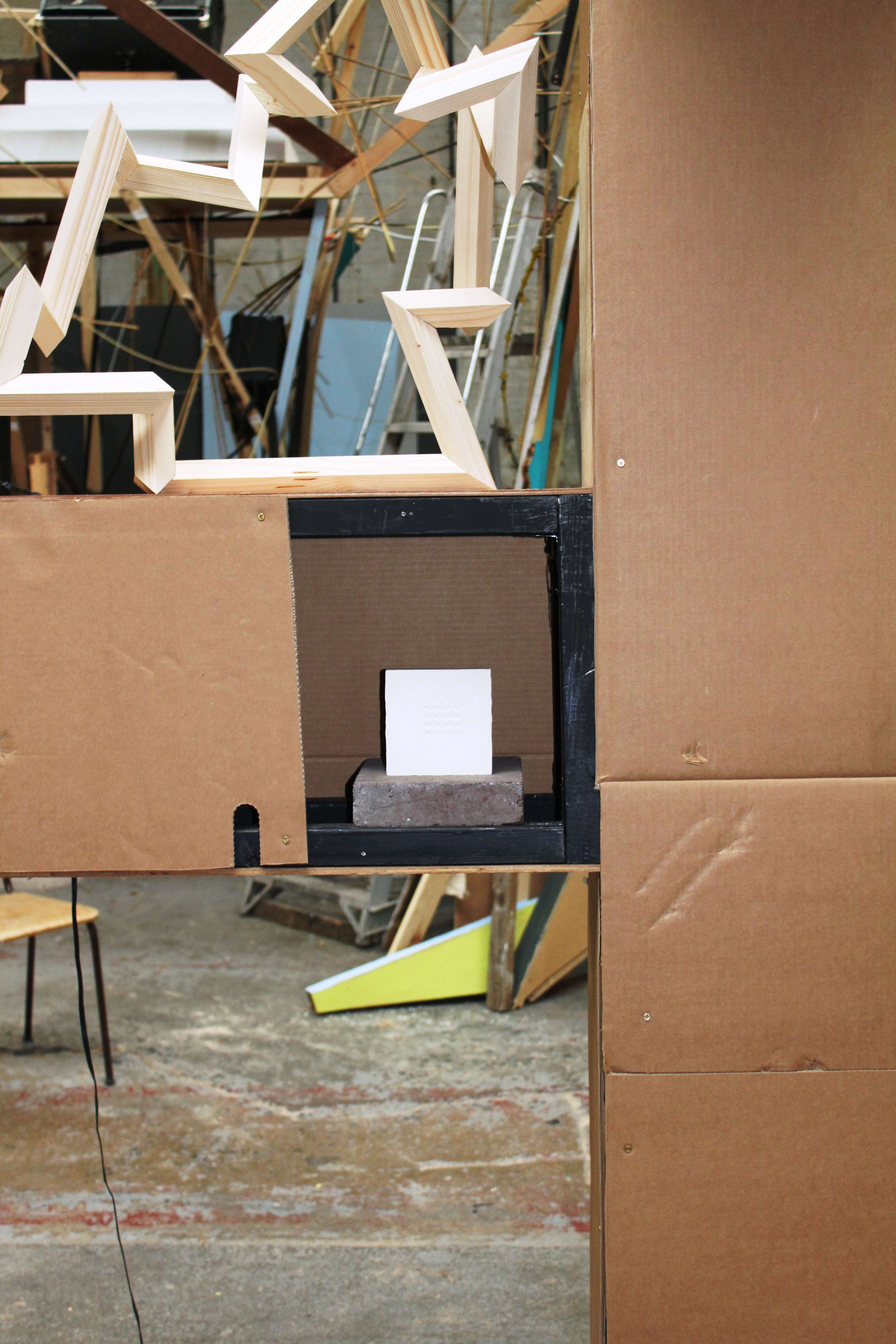
‘Bricks with Blind suggestions’ were cast in plaster from a series of plain embossed photo-etchings that play with language –
shifting patterns, meanings and thought forms. Sense. Nonsense.
A questioning of sorts?
I changed from studying theology & philosophy to fine art because of a need to see, feel and make what I was thinking. The photo-etched texts explore an interest in the edges of visual thought.
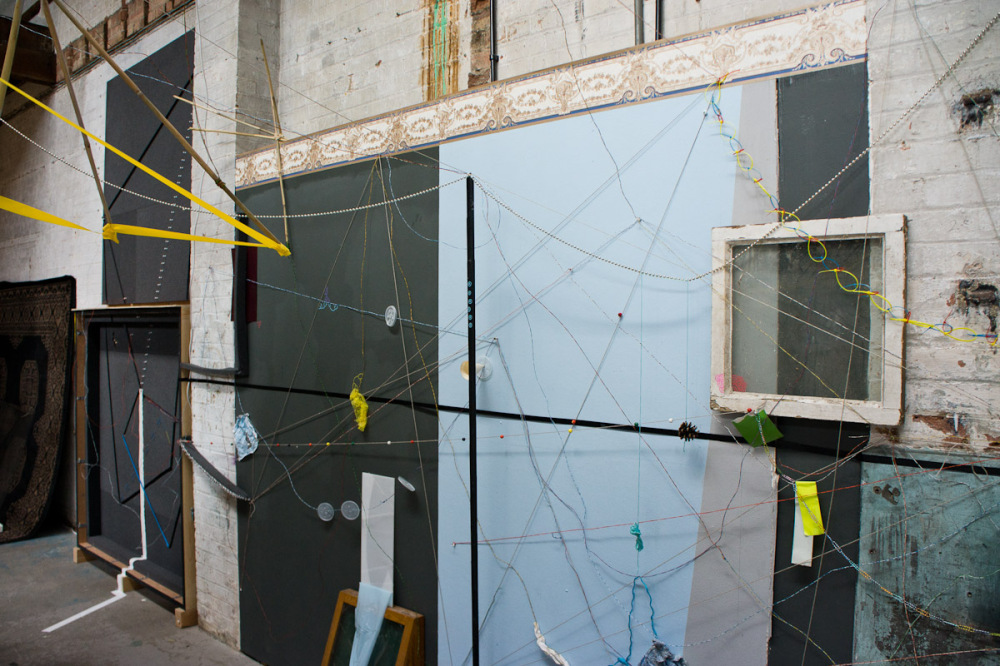
The bricks were used to create installations as part of two Warrior Studios Artists Collective shows – Brewsters House (Testbed, London)
and What is done cannot be undone (Ovada, Oxford).
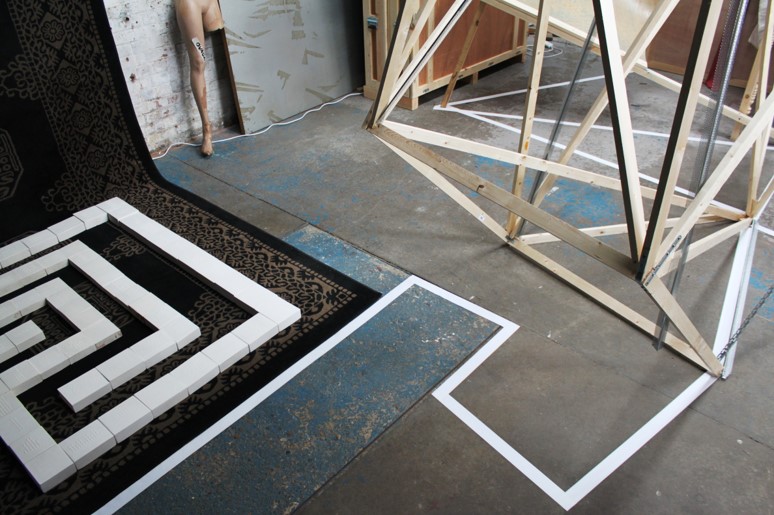
They were also used in a performance film The Labyrinth Walk – a short take on living and dying which uses musical translations of some of the bricks.
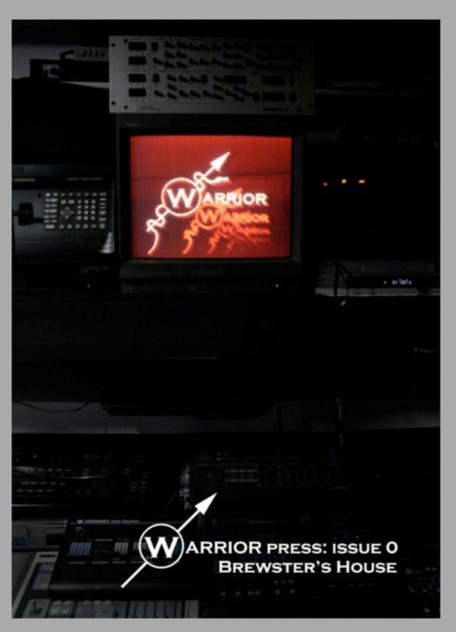
The narrative of Brewster’s House was written by Duncan McAfee and acted as a curatorial device, drawing links between the work of the 11 Warrior artists in the exhibition. It was the text for Warrior Press: Issue 0.
Warrior Press was set up in 2013 as vehicle for the production of new work, the sharing and dissemination of ideas and the promotion of Warrior Studios artists.
Brewster’s House took it’s name from Brewster Kahle, founder and director of the Internet Archive, a free service which archives World Wide Web documents.
Brewster’s House is a labyrinth of ever shifting and changing rooms (imagine being inside the world wide web), populated by images and sounds that appear in evolving arrangements as the story progresses. The protagonist awakes here and spends the story trying to find a way out, documenting the process in a notebook and finally discovering that he is a virus.
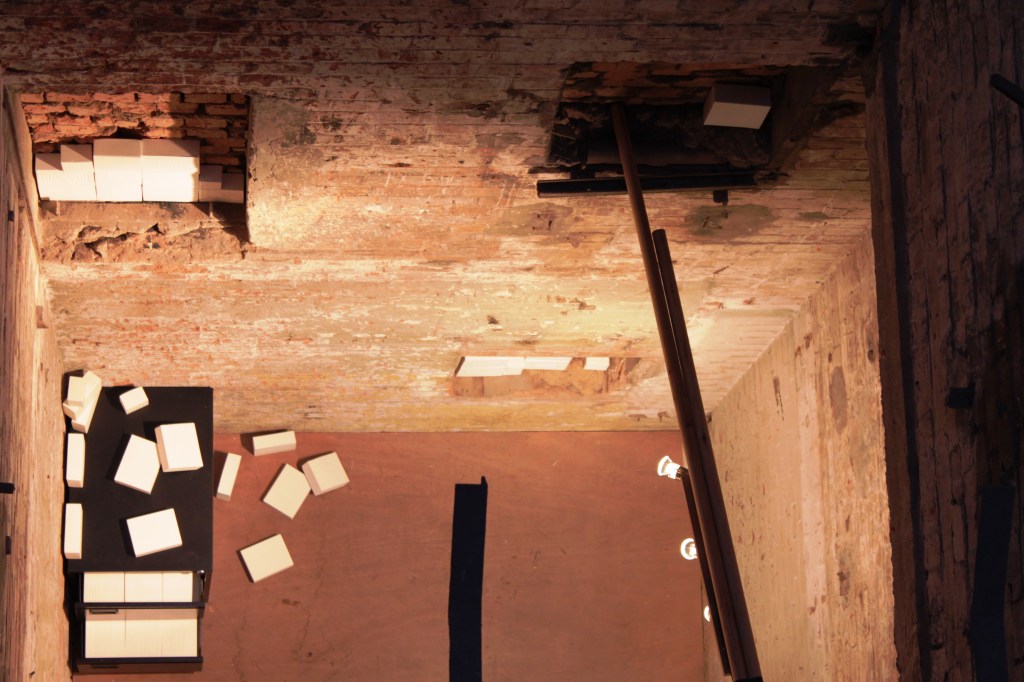
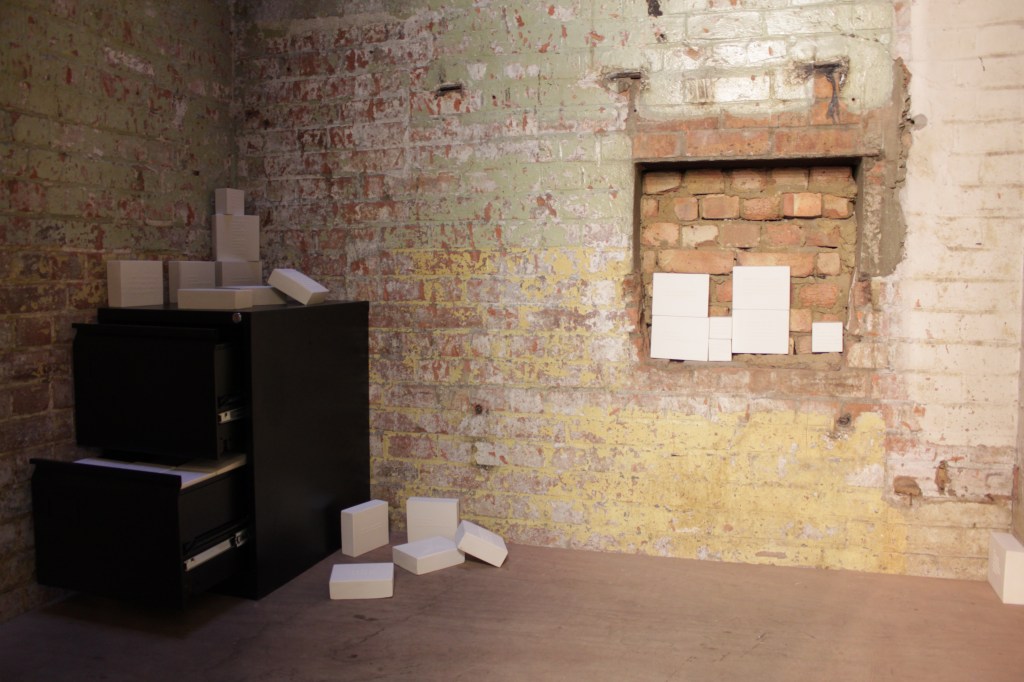
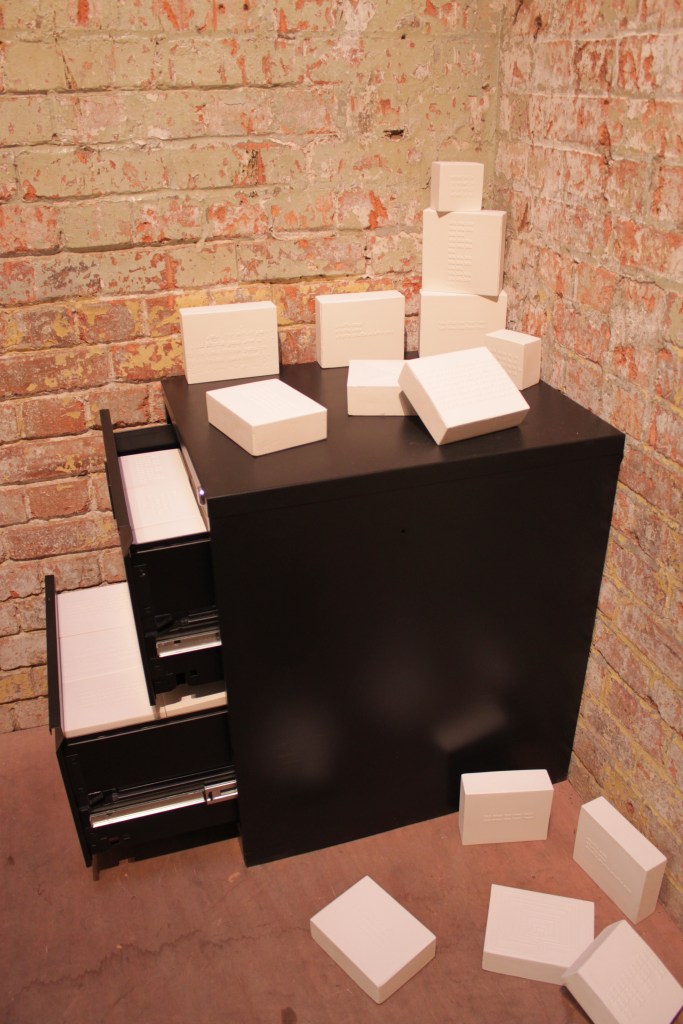
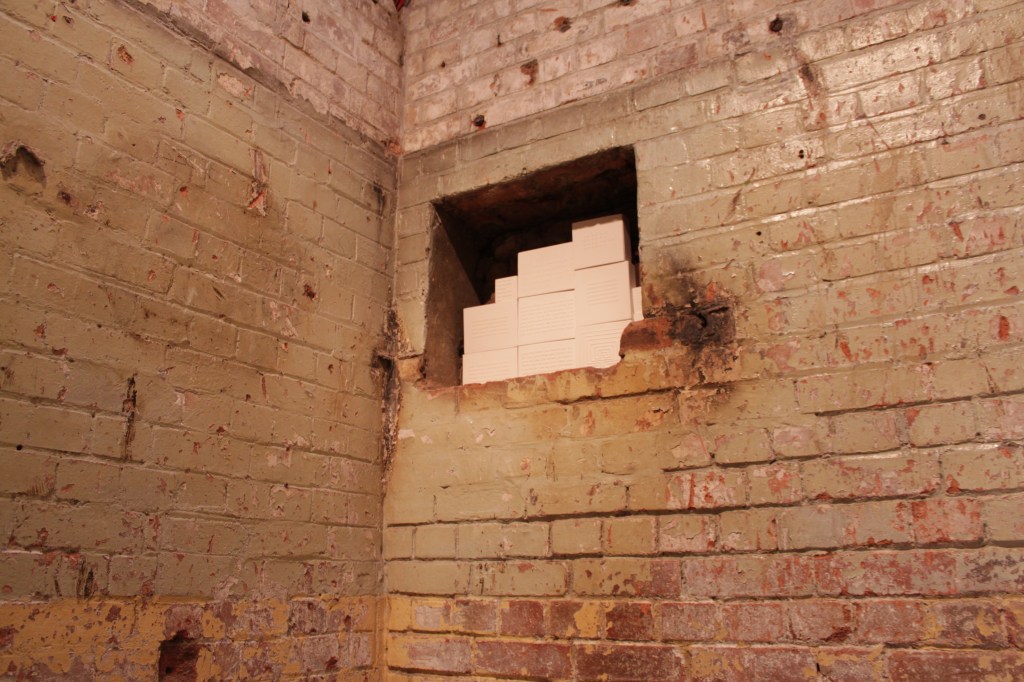
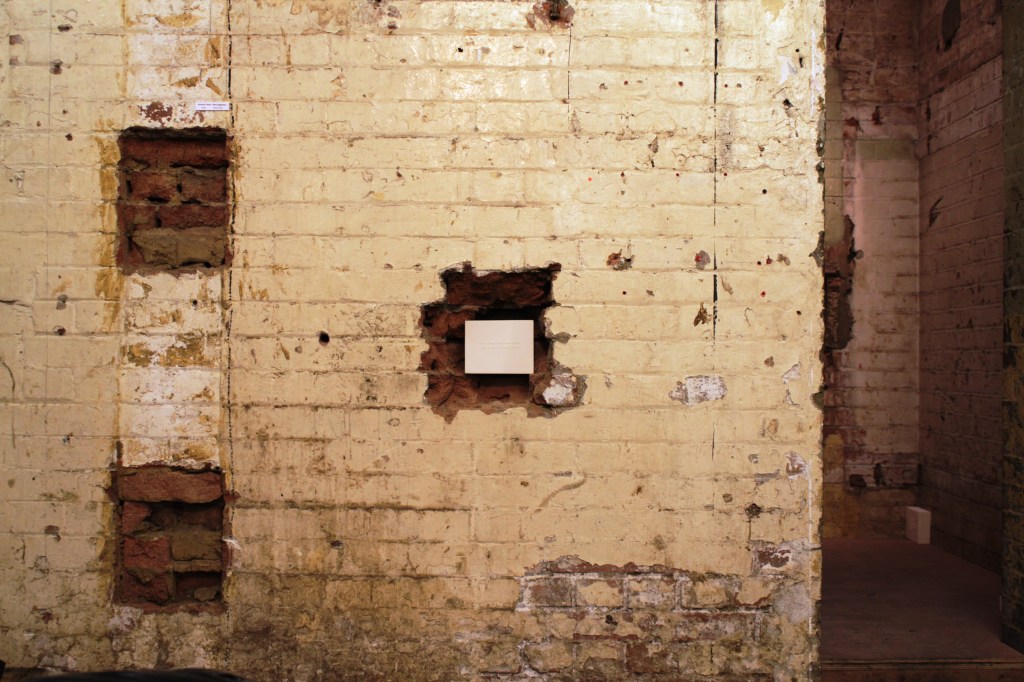
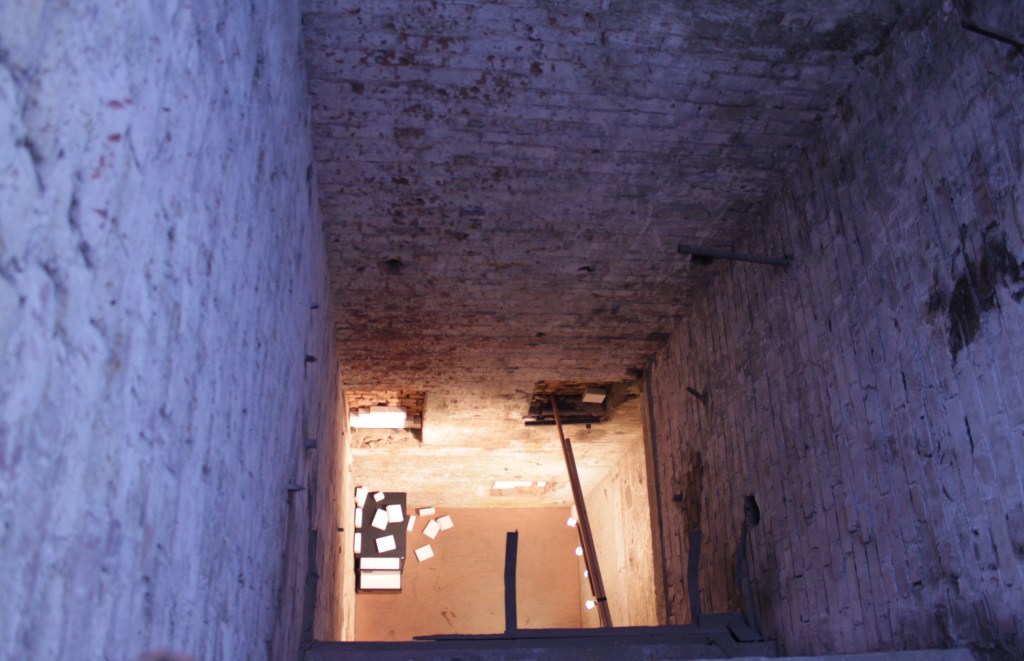
Bricks installed in the disused lift shaft at Testbed referring to the images / clues / the writing on the wall found in the strange and unknown place that is described in the text of Brewster’s House:
“The first seemed to be directions for a dance, perhaps instructing me on some ritual I must undertake in order to free myself from this purgatory”, to no longer be “lost. And lost within that lostness”.
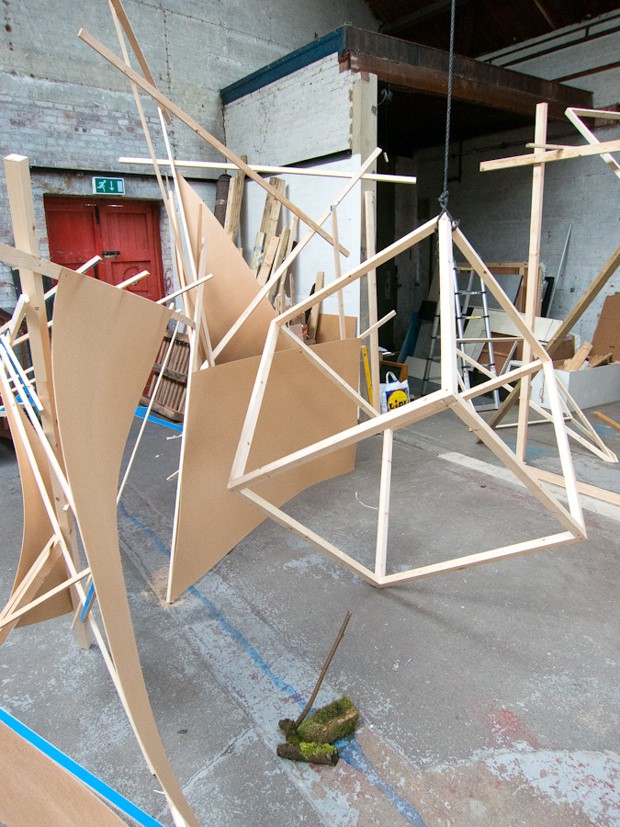
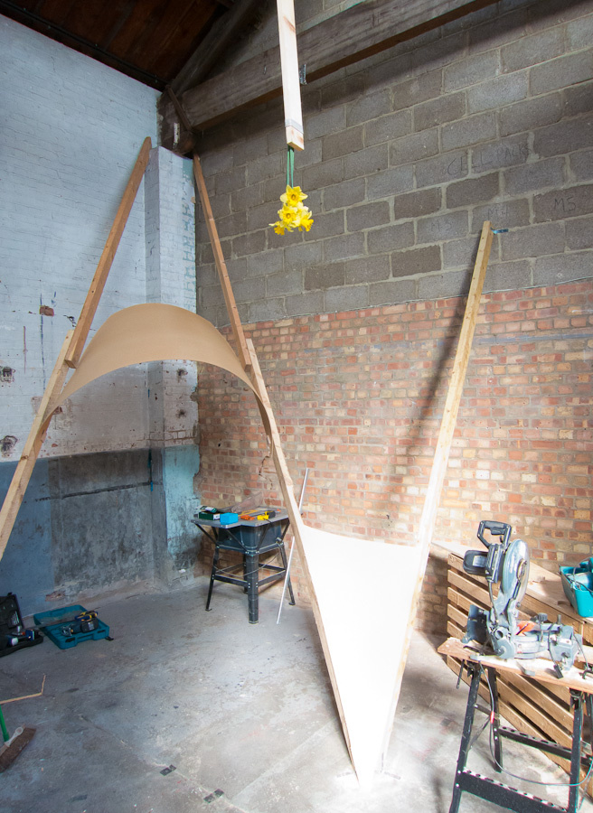
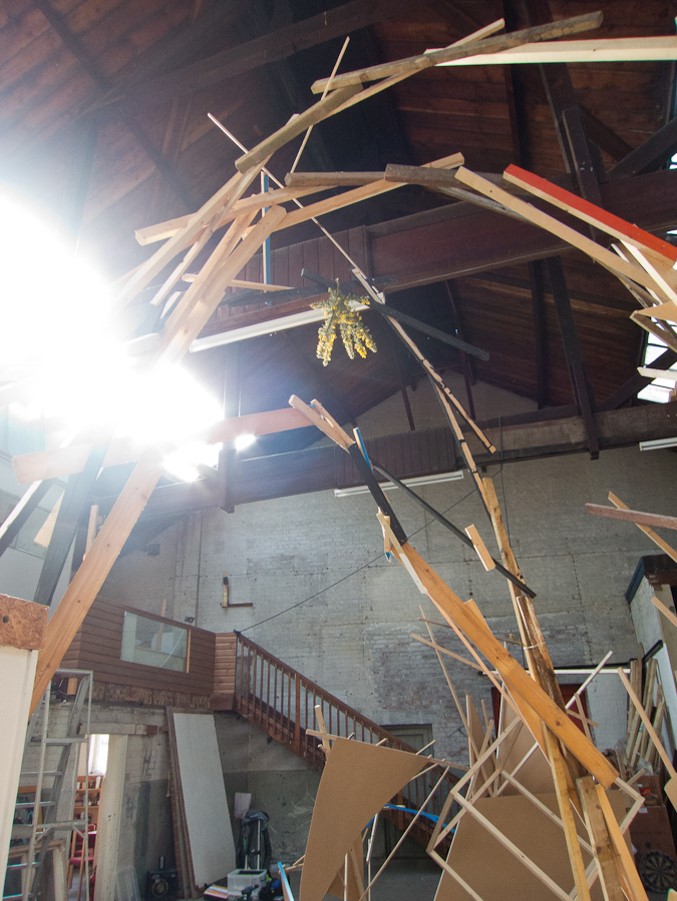
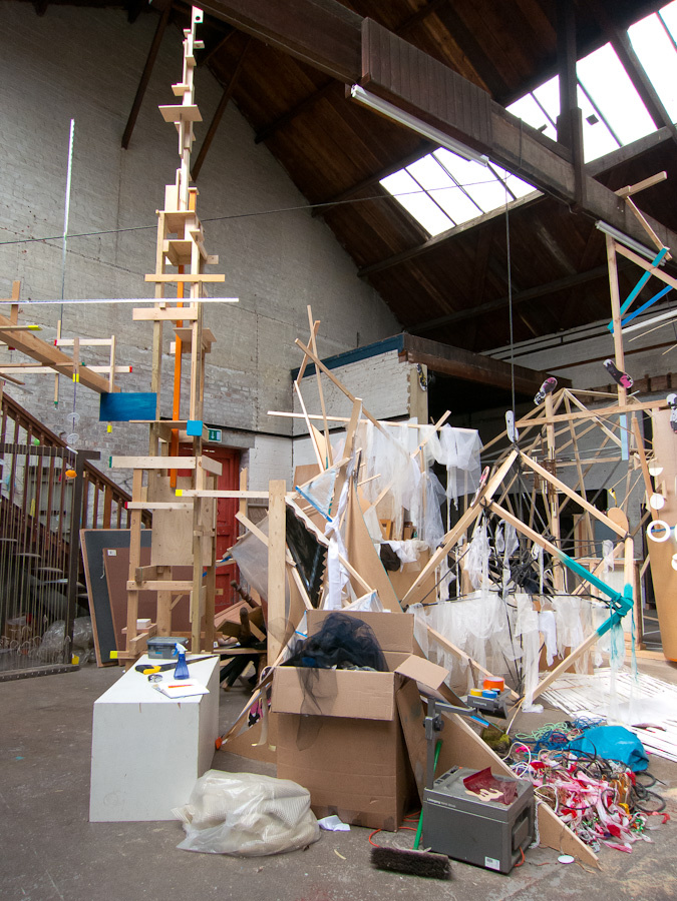
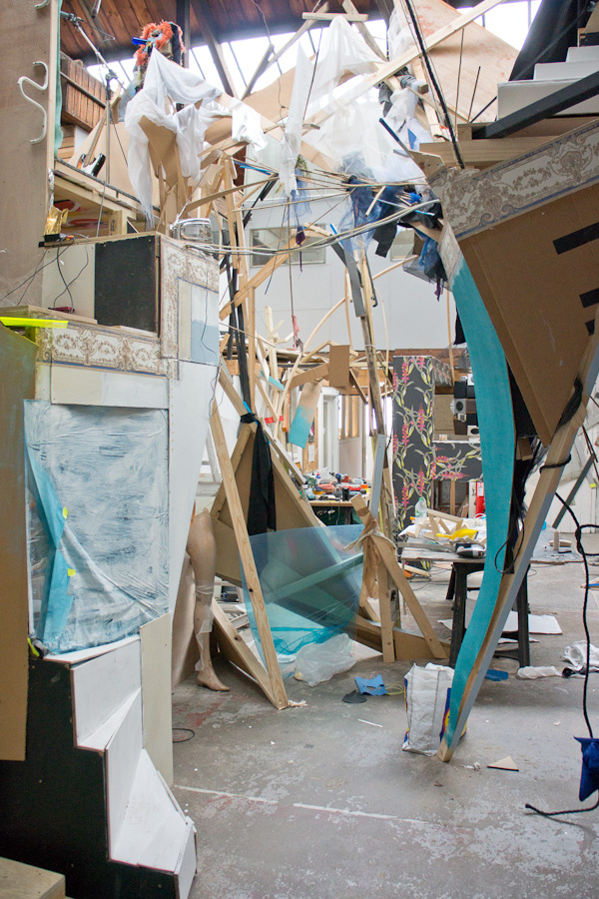
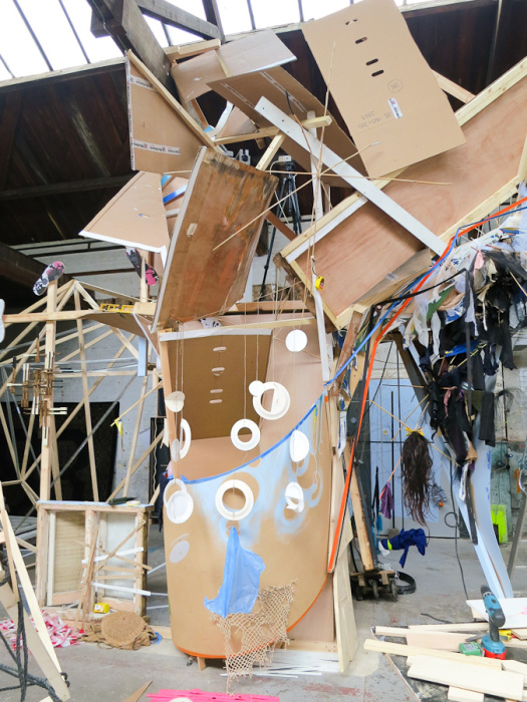
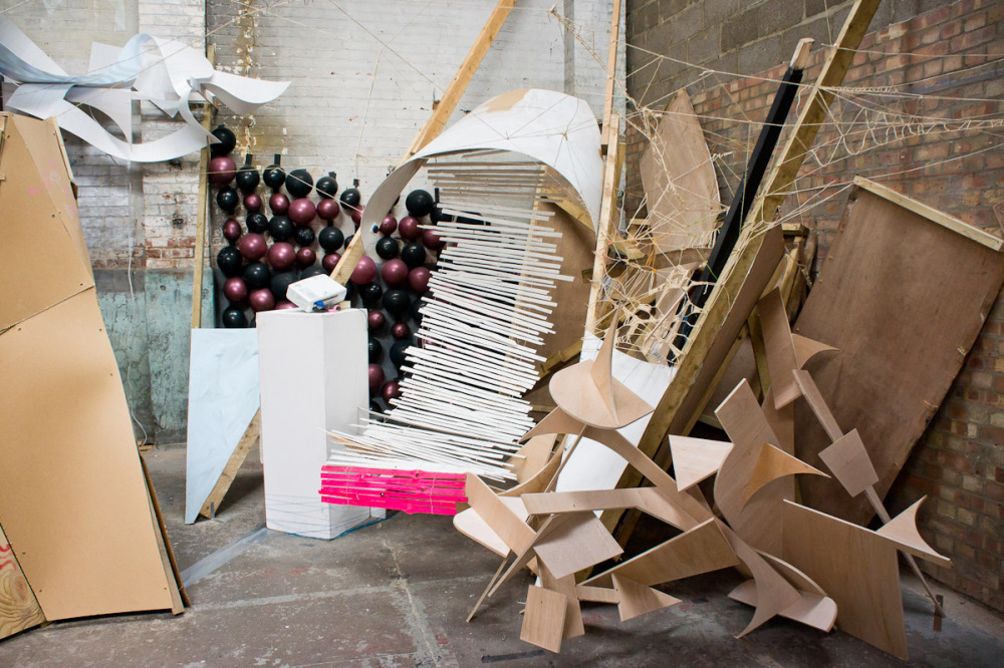
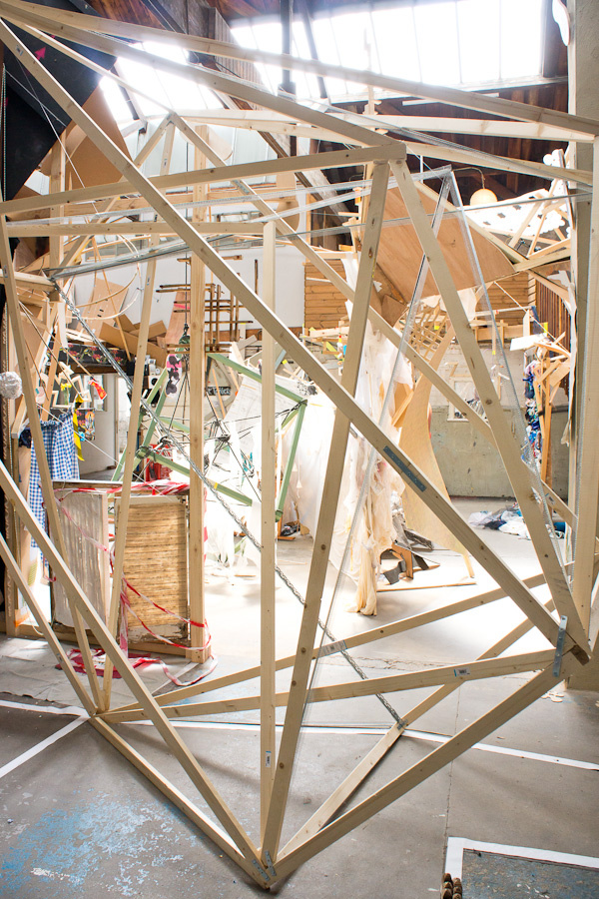
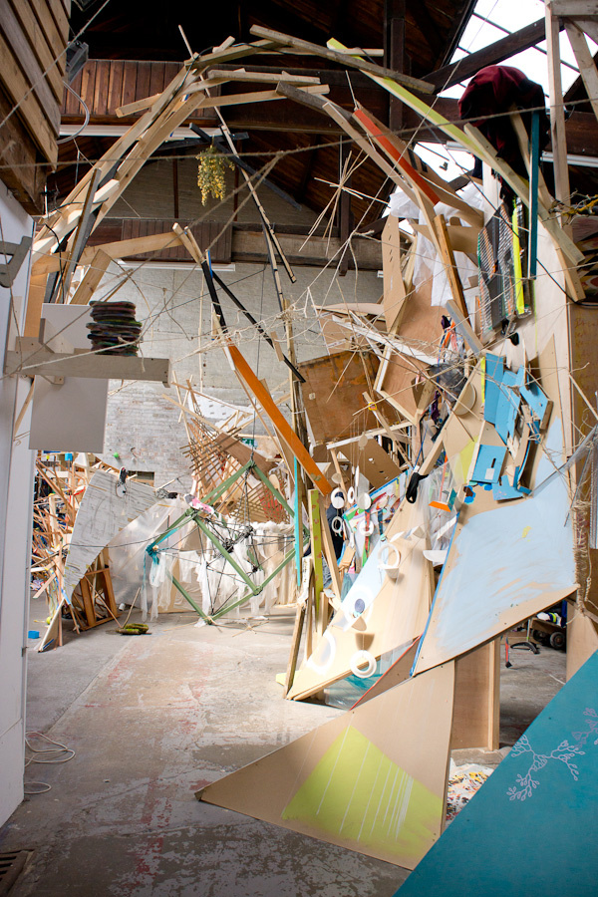
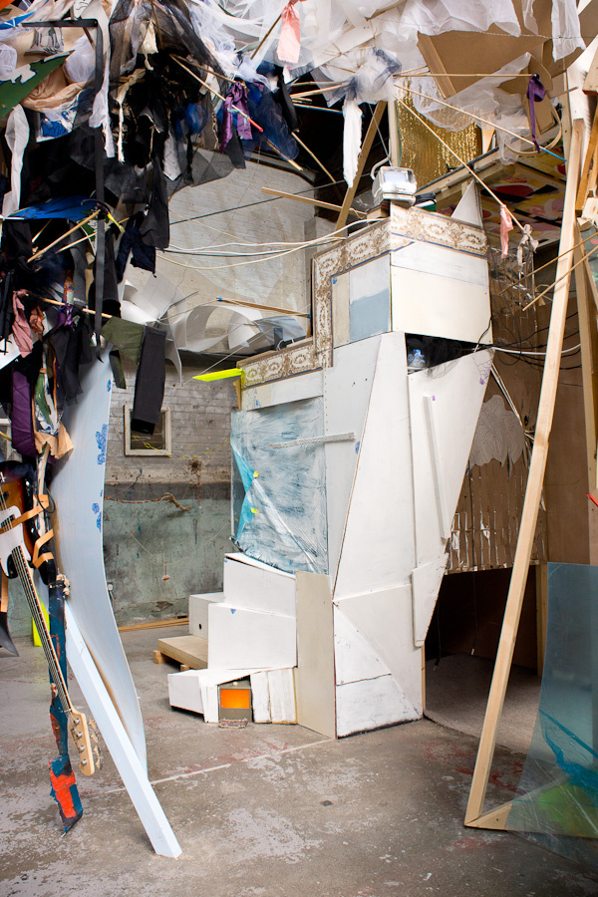
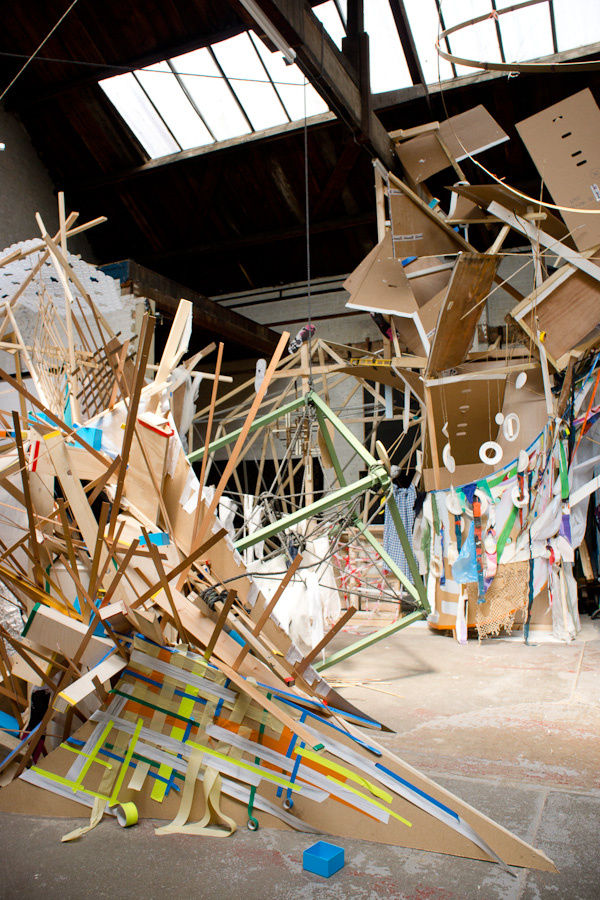
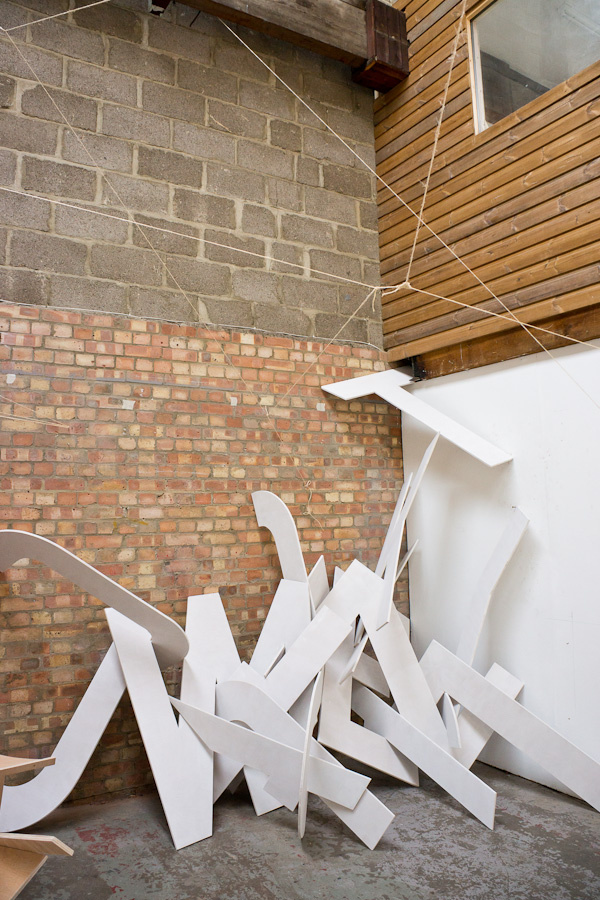
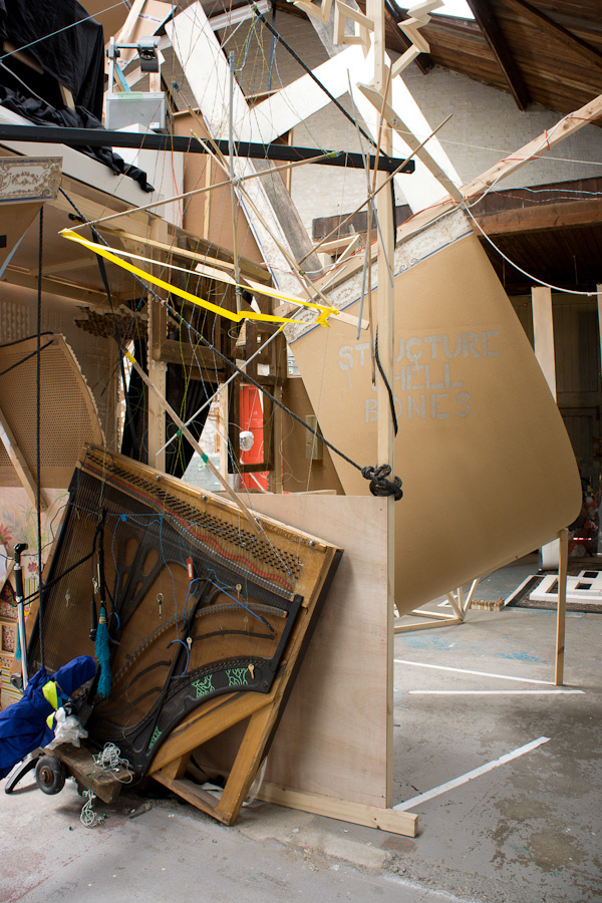
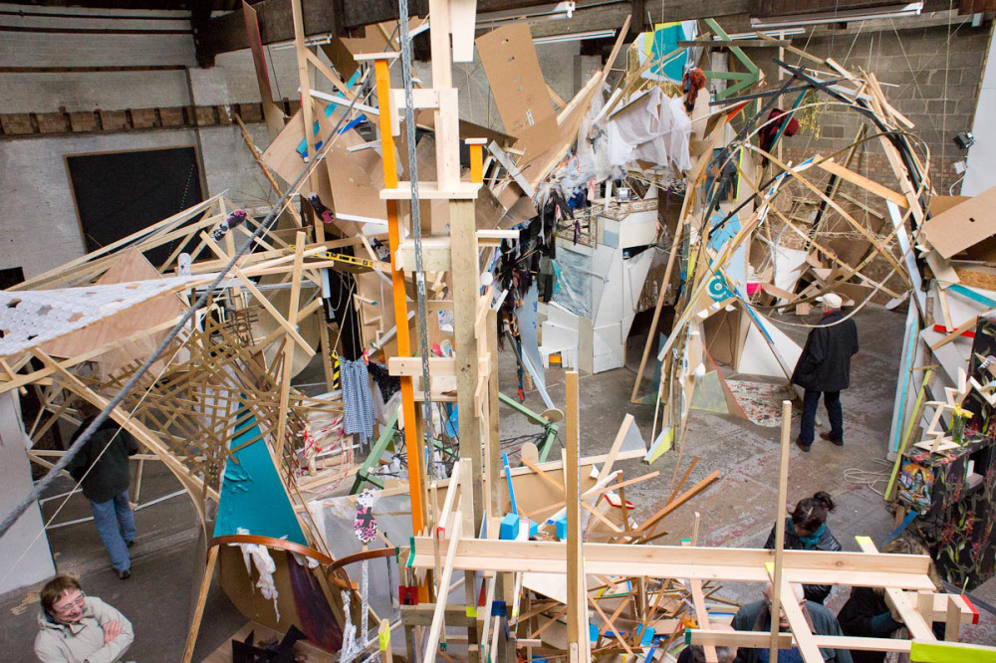
What Is Done Cannot Be Undone took the merzbau of Karl Schwitters as a reference and starting point to produce a collaborative piece over the course of a one month residency in Ovada, an experimental art space in Oxford.
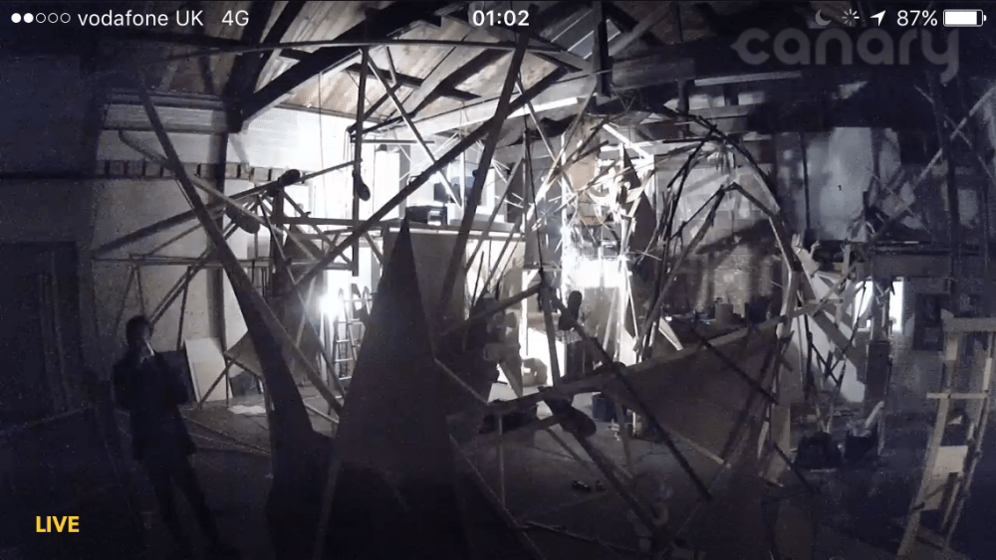
12 of the Warrior artists worked in the space at various times in a spirit of parallel play, where the work grew, changed, shifted, collapsed and was documented continuously via a cctv canary camera we set up and live streamed on youtube.
Warrior Studios Collective Artists –
Jane Campbell, David Degreef-Mounier, Phil Dobson, Hugh Gilmour,
James Alec Hardy, Jez Jacobs, Jeremy Jeffs, Gary Kempston, Duncan McAfee, Michael Rodgers, Pauline Smith, and Federica Dalla Vecchia.
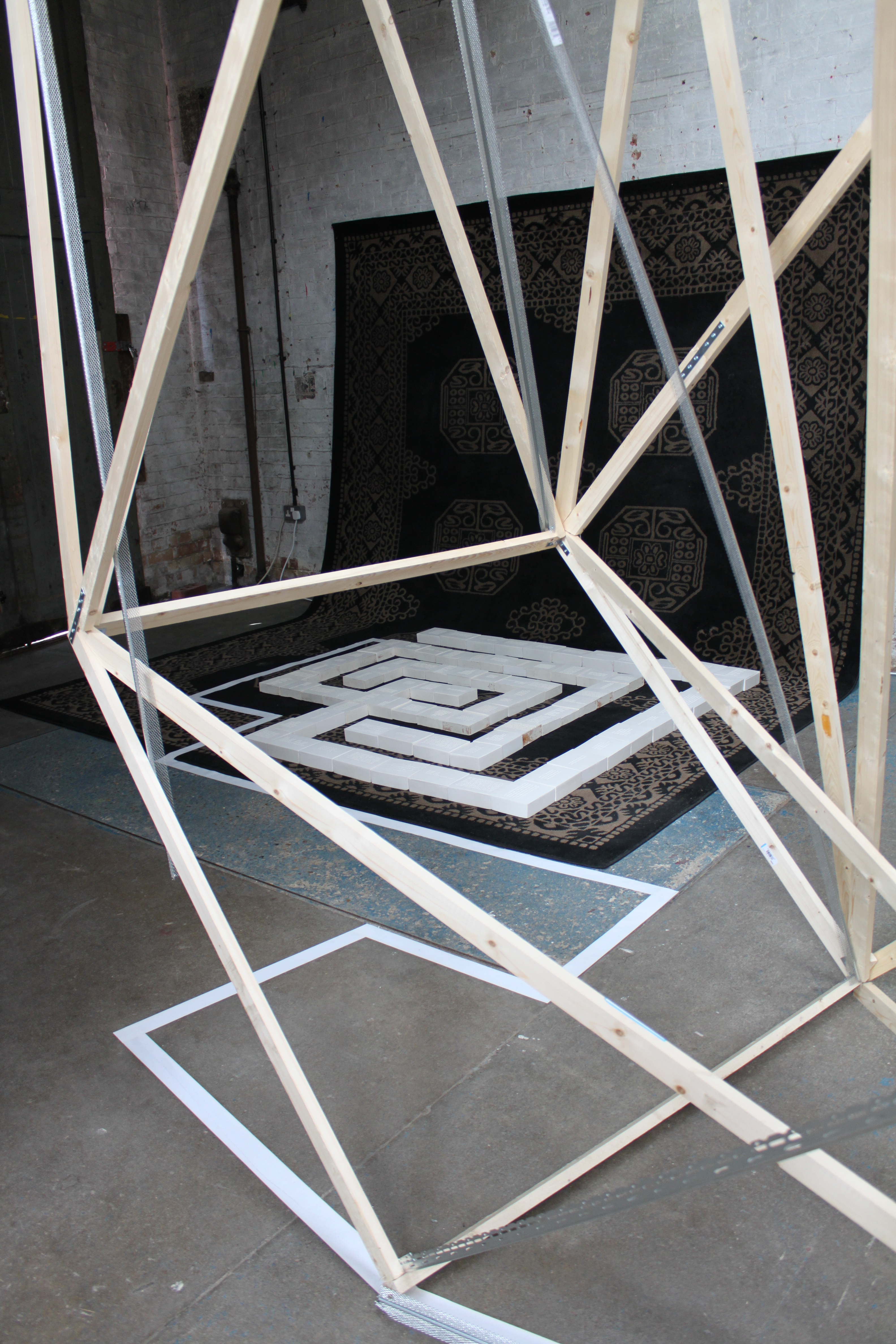
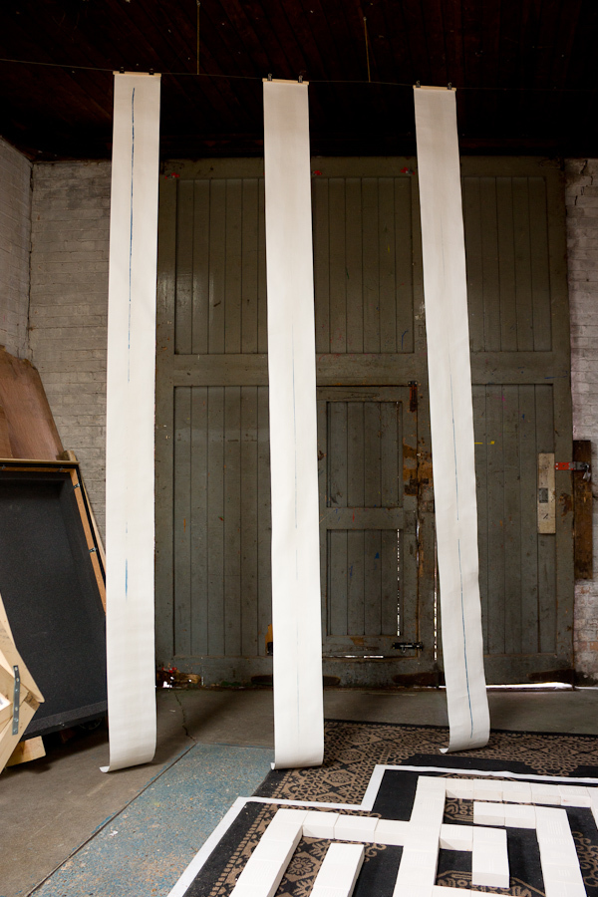
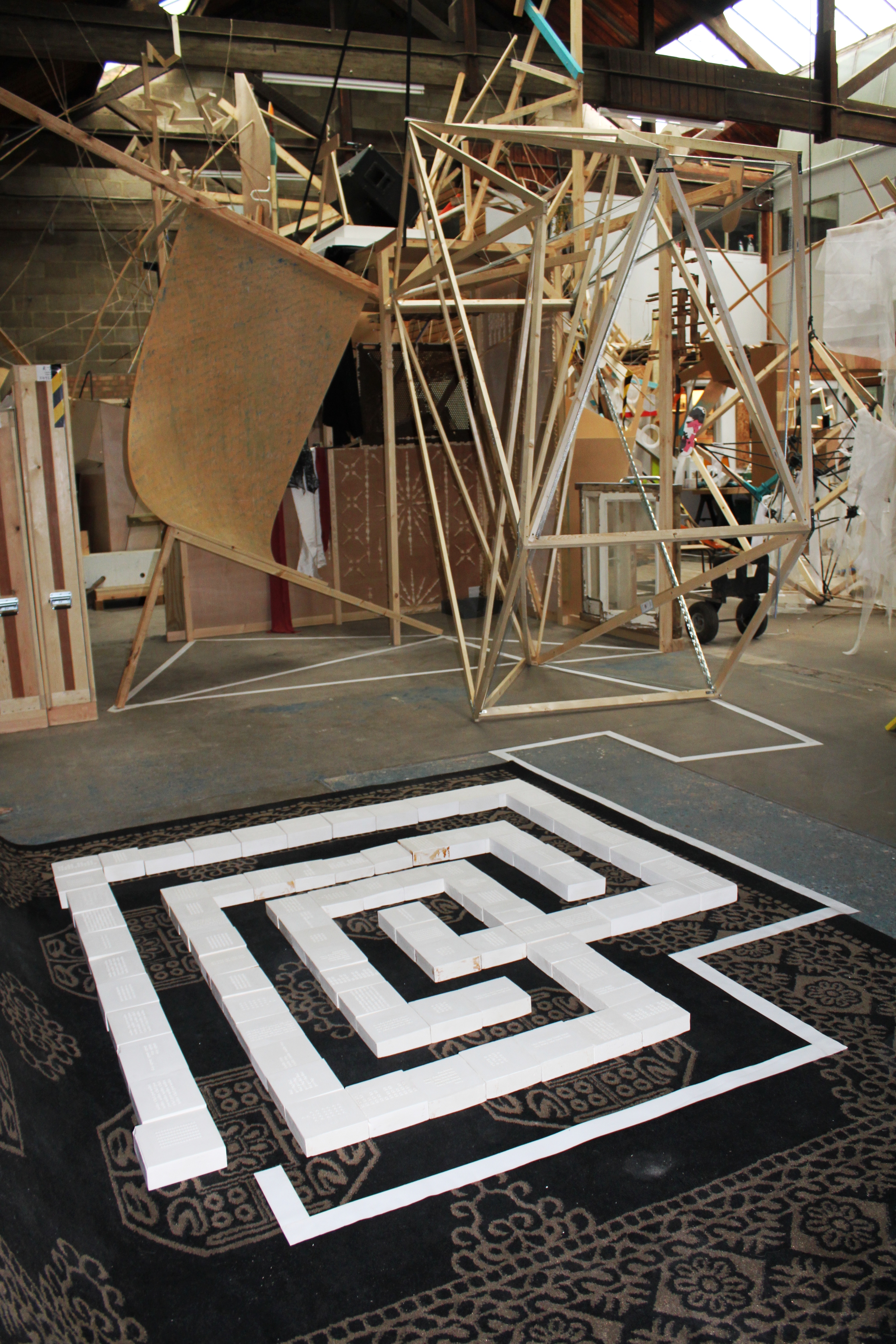
The plaster cast bricks with blind suggestions play with boundaries of sense and nonsense, and refer obliquely to Schwitters’ (Dada) work with language, word and sound. This blurring of meaning and intention seemed to echo a thought on the collaborative edges being explored and enquired of in What Is Done Cannot Be Undone.
The overall structure relates more specifically to Merzbau as building, construction, and container, with reference to physical or psychological journeys – retreats and refuges, with an interest in this aspect of Schwitters’ time spent in the Lake District living and working at his Merzbau barn/hut.
Labyrinth symbolism seemed increasingly relevant – journeys into the underworld and out again. These cyclic journeys of death and rebirth could describe aspects of the artistic and collaborative processes that were being played out at Ovada.
 Pauline Smith